


Highlights:
- What is a Credit Score
- What Does a Credit Score of 777 Mean
- Is a 777 Credit Score Considered Good
- Credit Score Ranges and What They Signify
- Factors That Influence Your Credit Score
- Benefits of Having a 777 Credit Score
- How to Achieve a 777 or Higher Credit Score
- What to Do if Your Credit Score is Below 777
- How Often to Check Your Credit Score
A 777 credit score tends to stand out quietly. It is not a round milestone like 750, nor does it sit at the extreme end of the scale. It signals that something has been going right over time.
This number does not appear because of a single decision or one timely payment. It shows up after months, sometimes years, of fairly ordinary credit behaviour done consistently. If you are trying to understand what a 777 credit score actually reflects, and how it is usually viewed, it helps to look beyond the number itself.
What is a Credit Score
A credit score is a numerical summary of how an individual has managed credit over time. It is generated using data shared by lenders with credit bureaus such as CIBIL and is recalculated periodically based on recent activity.
Rather than capturing income or savings, the score focuses on behaviour—repayment patterns, credit usage, and how responsibly credit limits are handled.
What Does a Credit Score of 777 Mean
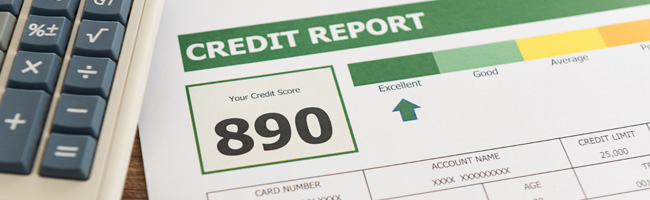
A credit score of 777 sits in the higher band of the scoring range used by CIBIL. It indicates a strong repayment track record, controlled credit utilisation, and limited negative events on the credit report.
Also Read: Generate CIBIL Score First Time
Is a 777 Credit Score Considered Good
Yes, a credit score of 777 is widely considered good. In many lending frameworks, scores in this range signal lower perceived risk and consistent credit discipline.
While no score guarantees approval, a 777 score generally places a borrower in a favourable evaluation bracket.
Credit Score Ranges and What They Signify
Credit scores typically span from lower ranges that reflect limited or inconsistent credit history to higher ranges that reflect stability and experience.
A score around the mid-700s is usually associated with mature credit behaviour—regular repayments, balanced exposure, and measured borrowing decisions.
Also Read: Different CIBIL Score Range
Factors That Influence Your Credit Score
Several elements contribute to a score reaching the 777 level. These include timely repayment of dues, moderate use of available credit limits, length of credit history, and a balanced mix of credit products.
Some factors work together rather than in isolation. For instance, higher limits paired with disciplined utilisation often reflect positively over time.
Also Read: Boost Your Credit Score by Knowing the Factors That Affect It
Benefits of Having a 777 Credit Score
A score in this range tends to make credit conversations simpler. Not necessarily easier or guaranteed, but more predictable. Lenders generally see fewer red flags, which means discussions focus more on eligibility details and less on explaining past behaviour.
For borrowers, the benefit is often subtle. It does not change how credit works, but it does change how smoothly the process usually moves.
How to Achieve a 777 or Higher Credit Score
Reaching this range usually involves consistency rather than shortcuts. Paying dues on time, avoiding excessive credit enquiries, and maintaining utilisation within comfortable limits are common patterns seen in higher scores.
Imagine building the score brick by brick—each repayment reinforcing the structure rather than rushing to add more credit.
What to Do if Your Credit Score is Below 777
A score below 777 does not signal a problem; it simply reflects a different stage of credit history. Reviewing your credit report, correcting inaccuracies, and allowing time for positive behaviour to accumulate are practical steps.
Scores tend to improve gradually as patterns stabilise.
Also Read: Increase Your CIBIL Score Above 800
How Often to Check Your Credit Score
Checking your own credit score does not impact it. Reviewing it periodically—especially before applying for credit or after closing a loan—helps ensure accuracy and awareness.
Mobile and digital access have made this monitoring easier and more routine.
FAQs
It is generally seen as a strong score. Lenders may classify it as very good or excellent, depending on their internal policies.
Small movements are normal. Larger changes usually follow a shift in repayment patterns or credit usage, not a single isolated action.
Income is not part of the scoring formula. The score reflects how credit has been handled, not how much is earned.
In practice, maintaining steady habits matters more than targeting a specific score.
Disclaimer
These rates are indicative and remain subject to change depending on the laws and government guidelines, applicable at the time being. However, Bajaj Housing Finance Limited (‘BHFL’) is under no obligation to update or keep the information current. Users are advised to seek independent legal and professional advice before acting on the basis of the information contained in the Website. Placing reliance on the aforementioned information shall always be the sole responsibility and decision of the User and the User shall assume the entire risk of any use made of this information.
In no event shall BHFL or the Bajaj Group, its employees, directors or any of its agents or any other party involved in creating, producing, or delivering this Website shall be liable for any direct, indirect, punitive, incidental, special, consequential damages (including lost revenues or profits, loss of business or loss of data) or any damages whatsoever connected to the User’s reliance on the aforementioned information.
Trending Articles

home+loan Home Loan
[N][T][T][N][T]
IGR Maharashtra Property Registration Guide – Simplifying Your Property Transactions2025-10-22 | 3 min

home+loan Home Loan
[N][T][T][N][T]
IGRS Madhya Pradesh Guide to Property Registration – A Complete Overview2025-10-30 | 4 min

home+loan Home Loan
[N][T][T][N][T]
Understanding Stamp Duty and Registration in Himachal Pradesh2025-10-09 | 3 min

home+loan Home Loan
[N][T][T][N][T]
Everything You Need to Know About Home Loan Tax Benefits2024-04-23 | 6 min

home+loan Home Loan
[N][T][T][N][T]
How to Get a Certified Copy of Your Property Title Deed: A Guide for Property Owners2025-07-16 | 3 min

home+loan Home Loan
[N][T][T][N][T]
CIBIL vs Experian – Which Credit Bureau is Better for Your Needs?2025-11-06 | 4 min

home+loan Home Loan
[N][T][T][N][T]
What is STD, LSS & DPD in CIBIL Reports and Their Differences2025-11-07 | 3 min

home+loan Home Loan
[N][T][T][N][T]
CIBIL vs. Equifax vs. Experian vs. CRIF High Mark: Key Differences2025-11-10 | 5 min
home+loan Home Loan
[N][T][T][N][T]
LSS Meaning in CIBIL: What It Is and How It Affects a Credit Report2025-11-19 | 5 min

home+loan Home Loan
[N][T][T][N][T]
The CIBIL Score Advantage for Loan Approval2025-05-05 | 7 min

home+loan Home Loan
[N][T][T][N][T]
Bihar Bhumi Land Records: Learn How to Access Land Records Online on Bihar Bhumi2025-02-27 | 6 min

home+loan Home Loan
[N][T][T][N][T]
Building on Your Own Land – Understanding Home Loan for Plot Purchase and Construction2026-02-19 | 2 min

home+loan Home Loan
[N][T][T][N][T]
Jantri Rate Gujarat – A Complete Guide to Land Valuation2025-09-30 | 4 min

home+loan Home Loan
[N][T][T][N][T]
A Complete Guide to Check Credit Score Easily for Free2024-05-02 | 3 min

home+loan Home Loan
[N][T][T][N][T]
Home Loan with No Credit History – A Structured Path to First-Time Homeownership2026-02-19 | 3 min

home+loan Home Loan
[N][T][T][N][T]
Affordable Housing as a Structured Growth Driver2026-02-20 | 3 min

home+loan Home Loan
[N][T][T][N][T]
How RERA Is Reshaping Trust in Affordable Housing?2026-02-20 | 3 min

home+loan Home Loan
[N][T][T][N][T]
Government Housing Schemes and the Path towards ‘Housing for All’2026-02-20 | 4 min

home+loan Home Loan
[N][T][T][N][T]
Sambhav Home Loans for Small Business Owners2026-02-23 | 5 min

home+loan Home Loan
[N][T][T][N][T]
Sambhav Home Loans for Small Shop Owners