


Highlights:
- What STD Means in a CIBIL Report?
- What LSS Means in a CIBIL Report?
- Understanding DPD in Your CIBIL Report
- Key Differences Between STD, LSS, and DPD
- How They Affect Your Credit Score and Loan Eligibility?
- How to Read These Sections in Your Report?
- What to Do if You Notice Errors?
- How to Maintain a Healthy STD Record?
If you have ever opened your CIBIL report and spotted terms like STD, LSS, or DPD, you may wonder what they stand for and why they matter. These short codes sum up how you have managed your credit over time.
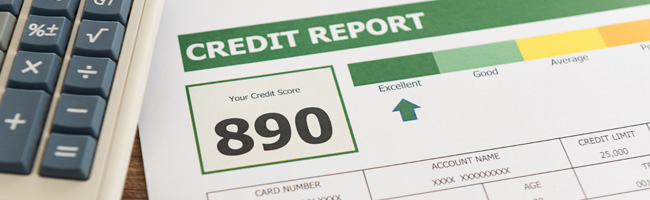
Imagine your CIBIL report as a kind of ‘financial pulse’. Lenders read STD, LSS, and DPD to assess your credit health. Each code tells whether you have been paying on time, delayed a few instalments, or defaulted in the past.
Let’s break down what these codes mean, how they differ, and how they influence your credit score and eligibility.
What STD Means in a CIBIL Report?
STD stands for Standard, and it’s a positive label you can find beside your loan or credit card account.
It means that your repayments are regular, and no instalment has been overdue for 90 days or more. In simple terms, you are managing your credit responsibly.
Your payments are on time, your account is healthy, and lenders view you as a reliable borrower. Keeping most of your accounts in STD status reflects consistency, which is exactly what credit bureaus and lenders value most.
What LSS Means in a CIBIL Report?
LSS refers to Lender Settled Status, which indicates that a loan has been settled between the borrower and the lender.
This status is applied when the borrower is unable to repay the full outstanding amount, and the lender agrees to accept a reduced amount as full and final settlement of the loan.
From a lender’s perspective, an LSS record may signal high risk.
Understanding DPD in Your CIBIL Report
DPD stands for Days Past Due, and it tracks how many days a payment was delayed for a particular month. Unlike STD or LSS, which describe overall account status, DPD acts as a timeline of monthly repayment behaviour.
Your CIBIL report typically displays DPD entries for the past 36 months. Each box represents a month, and the numbers show how many days a payment was late — 0, 30, 60, 90 and so on.
- A '0' means payment was made on time.
- '30' means it was delayed by one month.
- 'STD' means payment was within the permitted period.
For example, if your DPD row shows 00000030, it means all payments were regular except one, which was delayed by 30 days.
Key Differences Between STD, LSS, and DPD
While all three may appear in the same report, they serve different purposes.
Think of them as layers that tell the full story of your repayment habits.
- STD reflects consistent, on-time repayments
- DPD records specific monthly delays, giving a snapshot of short-term performance
- LSS indicates that a loan has been declared non-recoverable after repeated defaults
In essence, STD shows stability, DPD points to occasional slips, and LSS highlights serious lapses. Together, they form a complete picture of your credit discipline.
How STD, LSS, and DPD Affect Your Credit Score and Loan Eligibility?
Your credit score is influenced by how lenders interpret these codes.
If all your accounts are marked as STD, it signals strong financial behaviour, which supports a high CIBIL score. Repeated DPD entries showing 30 or 60-day delays can bring the score down, especially if they occur frequently.
An LSS status, however, has a more lasting impact. Since it indicates default, lenders may hesitate to approve new credit until you have rebuilt your repayment record over time.
This can be because credit scores are designed to reflect risk. Regular payments improve your reliability rating, while missed or delayed payments do the opposite. Over time, good behaviour helps even out past slips.
How to Read These Sections in Your Report?
When viewing your report, scroll to the 'Accounts Information' section. Here, you will find each loan or credit card listed with its details — account type, lender name, and current status.
Pay attention to two key areas:
- Account Status: This is where you will see STD, LSS, or SUB (Substandard).
- DPD History: A row of numbers or codes representing monthly payment behaviour.
If most of your entries show STD and 0, you are in good standing. If not, identify which accounts show delays or outdated data and confirm the information with your lender.
What to Do if You Notice Errors?
You may spot old or incorrect entries on a credit report, such as a payment shown as overdue even after closure. These discrepancies can appear if lenders haven’t updated the bureau with the latest information.
To correct this, raise a dispute through the CIBIL website, attach proof of payment, and provide your account details. CIBIL will verify your claim with the lender and update your report.
Resolving even small errors helps maintain accuracy and can improve your score if the incorrect data was lowering it.
Read More: Check Your CIBIL Score Free
How to Maintain a Healthy STD Record?
Maintaining STD status is mainly about being consistent. Small habits make a big difference:
- Set auto-debits for EMIs or credit card bills to avoid missing dates
- Keep credit utilisation below 30% of your available limit
- Avoid applying for multiple new loans or cards simultaneously
- Review your credit report regularly to ensure data accuracy
Over time, these simple steps create a positive pattern that lenders trust — strengthening both your STD record and your overall CIBIL score.
The information provided here is for general understanding of CIBIL report terminology in India. Please refer to your official CIBIL report or contact the bureau directly for the latest updates.
Frequently Asked Questions
While it’s a serious mark, steady and disciplined repayment on new credit accounts can help rebuild your profile.
It typically remains visible for up to seven years from the date of closure.
Lenders generally prefer accounts with an active STD status, as it reflects timely repayment and financial discipline.
The terminology may differ slightly, but the underlying meaning remains the same across CIBIL, Experian, and Equifax reports.
DISCLAIMER:
While care is taken to update the information, products, and services included in or available on our website and related platforms/websites, there may be inadvertent errors or delays in updating the information. The material contained in this website and on associated web pages, is for reference and general information purposes, and the details mentioned in the respective product/service document shall prevail in case of any inconsistency. Users should seek professional advice before acting on the basis of the information contained herein. Please take an informed decision with respect to any product or service after going through the relevant product/service document and applicable terms and conditions. Neither Bajaj Housing Finance Limited nor any of its agents/associates/affiliates shall be liable for any act or omission of the Users relying on the information contained on this website and on associated web pages. In case any inconsistencies are observed, please click on contact information.
Trending Articles

home+loan Home Loan
[N][T][T][N][T]
IGR Maharashtra Property Registration Guide – Simplifying Your Property Transactions2025-10-22 | 3 min

home+loan Home Loan
[N][T][T][N][T]
IGRS Madhya Pradesh Guide to Property Registration – A Complete Overview2025-10-30 | 4 min

home+loan Home Loan
[N][T][T][N][T]
Understanding Stamp Duty and Registration in Himachal Pradesh2025-10-09 | 3 min

home+loan Home Loan
[N][T][T][N][T]
Everything You Need to Know About Home Loan Tax Benefits2024-04-23 | 6 min

home+loan Home Loan
[N][T][T][N][T]
How to Get a Certified Copy of Your Property Title Deed: A Guide for Property Owners2025-07-16 | 3 min

home+loan Home Loan
[N][T][T][N][T]
CIBIL vs Experian – Which Credit Bureau is Better for Your Needs?2025-11-06 | 4 min

home+loan Home Loan
[N][T][T][N][T]
What is STD, LSS & DPD in CIBIL Reports and Their Differences2025-11-07 | 3 min

home+loan Home Loan
[N][T][T][N][T]
CIBIL vs. Equifax vs. Experian vs. CRIF High Mark: Key Differences2025-11-10 | 5 min
home+loan Home Loan
[N][T][T][N][T]
LSS Meaning in CIBIL: What It Is and How It Affects a Credit Report2025-11-19 | 5 min

home+loan Home Loan
[N][T][T][N][T]
The CIBIL Score Advantage for Loan Approval2025-05-05 | 7 min

home+loan Home Loan
[N][T][T][N][T]
Bihar Bhumi Land Records: Learn How to Access Land Records Online on Bihar Bhumi2025-02-27 | 6 min

home+loan Home Loan
[N][T][T][N][T]
Building on Your Own Land – Understanding Home Loan for Plot Purchase and Construction2026-02-19 | 2 min

home+loan Home Loan
[N][T][T][N][T]
Jantri Rate Gujarat – A Complete Guide to Land Valuation2025-09-30 | 4 min

home+loan Home Loan
[N][T][T][N][T]
A Complete Guide to Check Credit Score Easily for Free2024-05-02 | 3 min

home+loan Home Loan
[N][T][T][N][T]
Home Loan with No Credit History – A Structured Path to First-Time Homeownership2026-02-19 | 3 min

home+loan Home Loan
[N][T][T][N][T]
Affordable Housing as a Structured Growth Driver2026-02-20 | 3 min
home+loan Home Loan
[N][T][T][N][T]
How RERA Is Reshaping Trust in Affordable Housing?2026-02-20 | 3 min

home+loan Home Loan
[N][T][T][N][T]
Government Housing Schemes and the Path towards ‘Housing for All’2026-02-20 | 4 min

home+loan Home Loan
[N][T][T][N][T]
Sambhav Home Loans for Small Business Owners2026-02-23 | 5 min

home+loan Home Loan
[N][T][T][N][T]
Sambhav Home Loans for Small Shop Owners